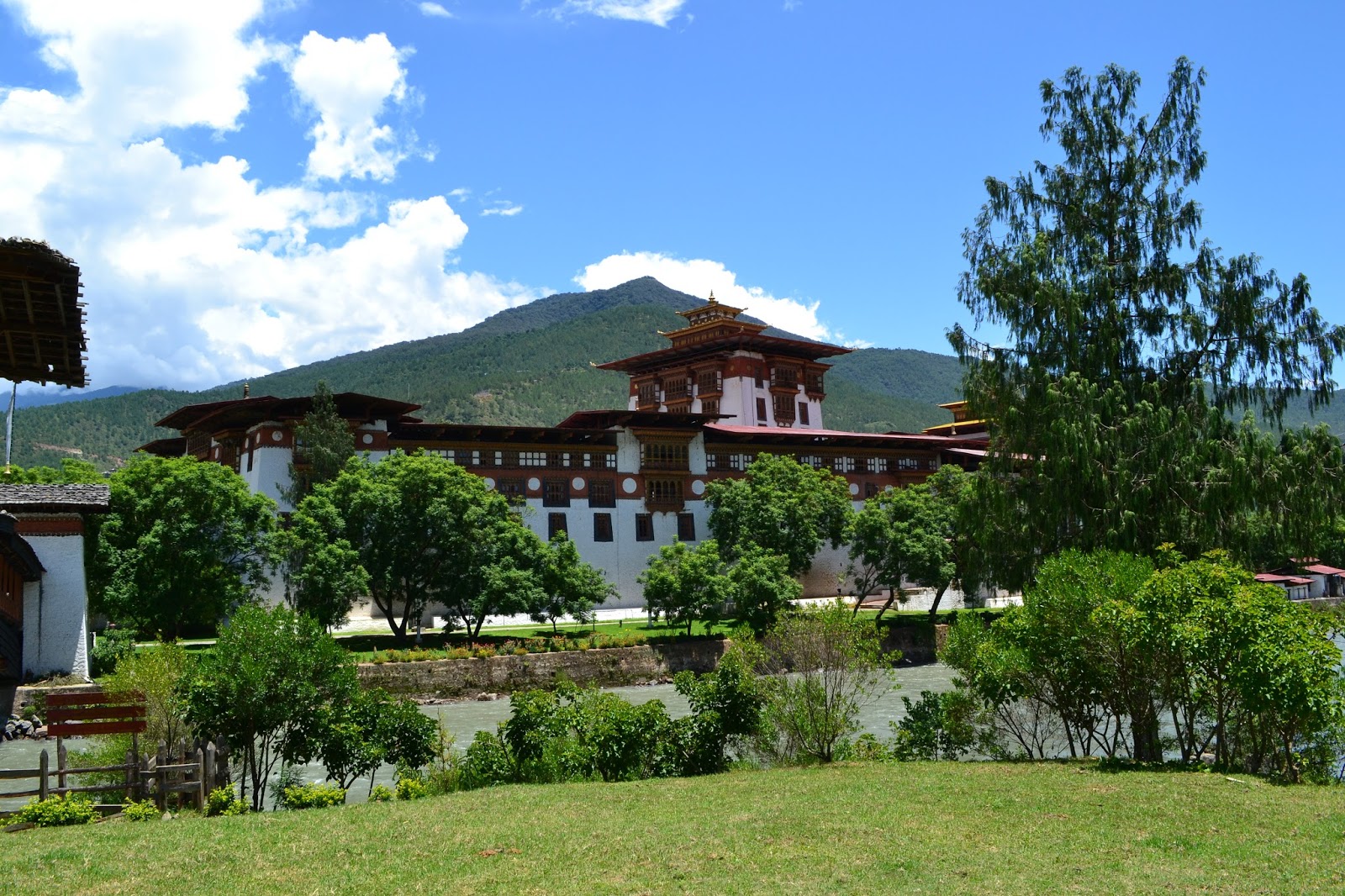
The Punakha Dzong is undoubtedly the most spectacular of all the Buddhist monasteries in Bhutan. I was excited to finally be able to visit this landmark that I had seen countless images of when I was doing the trip research.
The Dzong is the second oldest dzong in Bhutan and served as the administrative center and the seat of the Government of Bhutan until 1955, when the capital was moved to Thimphu. It sits on the confluence of two rivers - the Mo Chhu ("Mother") and the Po Chhu ("Father") rivers.

Wednesday, August 14, 2013




Tuesday, August 13, 2013
Dochula Pass
On our way from Thimphu to Punakha we made a brief stop at Dochula Pass Sitting at about 3100m, Dochula pass is high enough that on a clear day you can see a beautiful panoramic view of the Himalayas.


It was not our day for a view of the majestic mountains as it was cloudy and foggy.
Situated at the pass are the 108 stupas which were constructed in 2004 by the Queen Mother to commemorate the honor of His Majesty the 4th King.


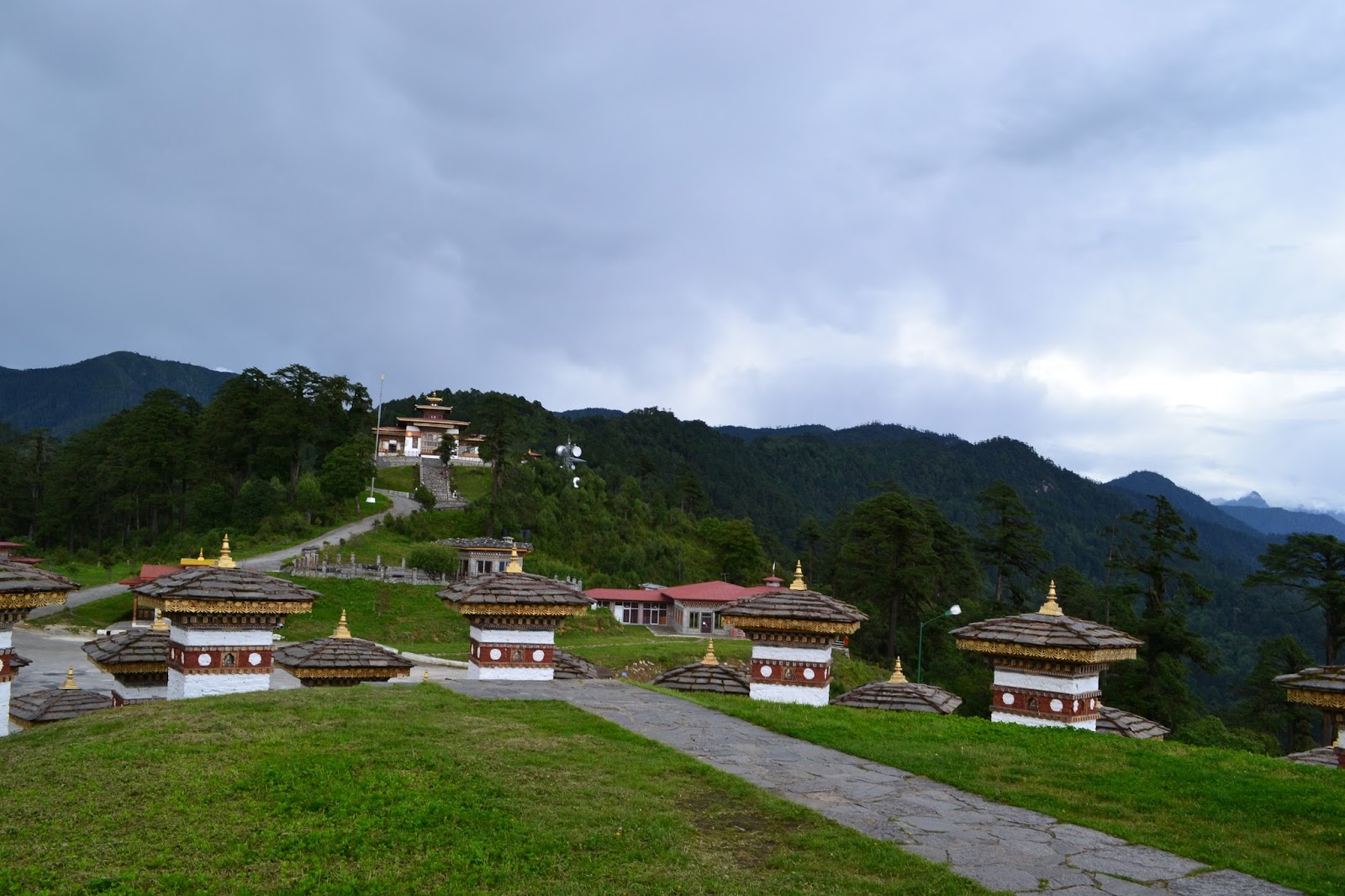


It was not our day for a view of the majestic mountains as it was cloudy and foggy.
Situated at the pass are the 108 stupas which were constructed in 2004 by the Queen Mother to commemorate the honor of His Majesty the 4th King.


Saturday, August 10, 2013
Spinal bone marrow, raw steak with skin attached and a mystery!
After reading about the very curious Newari cuisine, I had to try it while in Kathmandu. So I tasked the guy at the hotel reception to find me an authentic restaurant that would have what I had asked for. After calling ten different places, he reassured me there was a place that would cook it and off we went.
After a half of an hour of discussing with the restaurant staff, we realzied that these were very local dishes, therefore we would not be able to find them in the city. Disappointed? You bet.
So we went to a small bar for a beer. Our waiter, a very bright young man, was pretty sure he'd be able to help. Did not believe it, but gave it a shot. Twenty minutes later he shows up with three tiny plastic bags.


First: Ti-syah, braised in butter spinal cord, tasted very good, much like cooked bone marrow and fat as well.
 Second: Jan-la, raw steak with the skin still attached to it. Very good as well and spicier than chili itself.

Third one: a mystery dish. I showed him I wanted swan-puka, lung filled with spicy batter and topped off with steamed blood pudding. Due to language barriers, we were not able to find out what it was, except that it was out of buffalo. A local we asked for help swore up and down they were buffalo balls.
So this is still an unknown.
Nevertheless, another succesful culinary adventure.
After a half of an hour of discussing with the restaurant staff, we realzied that these were very local dishes, therefore we would not be able to find them in the city. Disappointed? You bet.
So we went to a small bar for a beer. Our waiter, a very bright young man, was pretty sure he'd be able to help. Did not believe it, but gave it a shot. Twenty minutes later he shows up with three tiny plastic bags.


First: Ti-syah, braised in butter spinal cord, tasted very good, much like cooked bone marrow and fat as well.

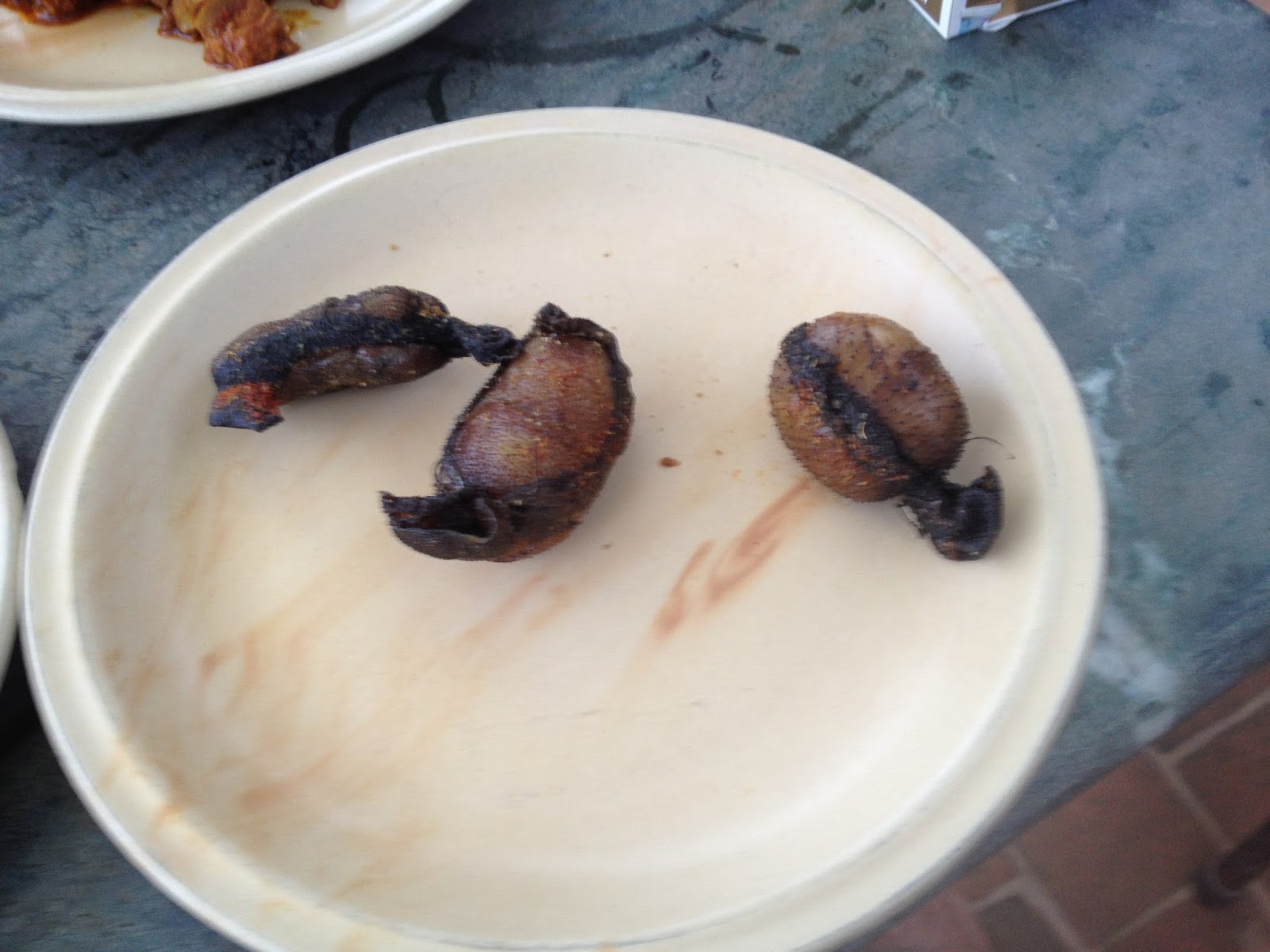
Third one: a mystery dish. I showed him I wanted swan-puka, lung filled with spicy batter and topped off with steamed blood pudding. Due to language barriers, we were not able to find out what it was, except that it was out of buffalo. A local we asked for help swore up and down they were buffalo balls.
So this is still an unknown.
Nevertheless, another succesful culinary adventure.
Throw my ashes to the wind
Located 30 minutes from Kathmandu is this Hindu spiritual Temple and cremation site, Pashupatinath. For me, who have not seen an open air cremation on a funeral, let alone 10 in a row all burning simultaneously, was a definite shock.



It is a fascinating exposure to the Hindu culture and tradition of cremation and and celebration of life. As you walk through the grounds you are exposed to every aspect of this process and as unusual as it may sound, photography is welcome.
As for myself, I could barely handle the smell of burning hair and for sure will not have any barbecue for quite a while. The rich people are cremated to the right, poor to the left, the places close to the temple come at a premium. You could also see little boys looking for gold, as in the gold teeth from the cremated rich.


There are many iconic Sadhu's (holy men) lounging in hidden nooks and prayer areas.


The spiritual river where the ashes are pushed into is the iconic Bagmati. This section is nothing short of putrid and foul. It remains however, a highly recommended spot to pay a visit to while in Kathmandu. It is one of the most significant Hindu temples of Lord Shiva in the world that is open to the public.
Subscribe to:
Posts (Atom)