Showing posts with label Hindu. Show all posts

Saturday, August 10, 2013

Throw my ashes to the wind

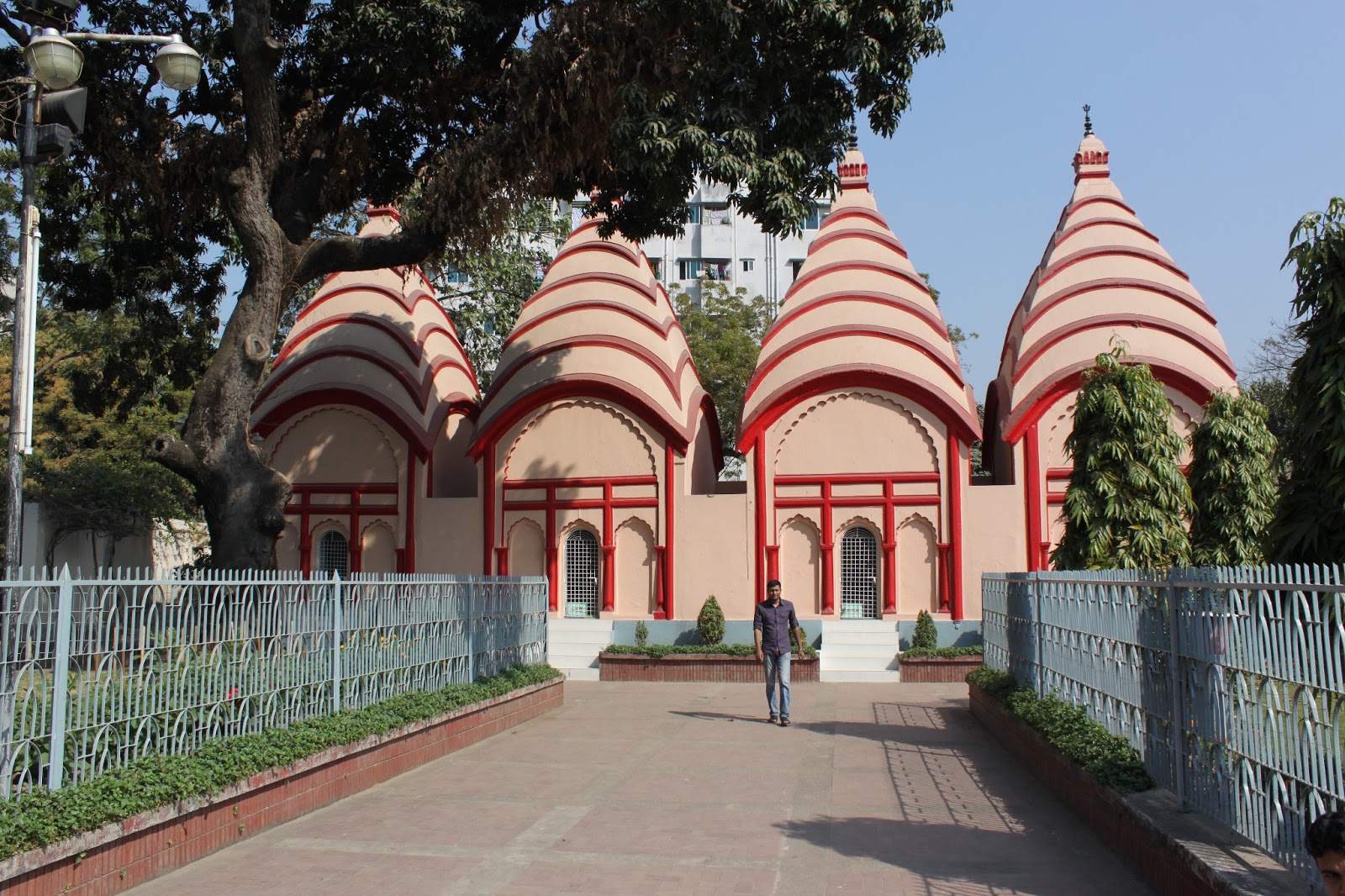
Located 30 minutes from Kathmandu is this Hindu spiritual Temple and cremation site, Pashupatinath. For me, who have not seen an open air cremation on a funeral, let alone 10 in a row all burning simultaneously, was a definite shock.

It is a fascinating exposure to the Hindu culture and tradition of cremation and and celebration of life. As you walk through the grounds you are exposed to every aspect of this process and as unusual as it may sound, photography is welcome.

As for myself, I could barely handle the smell of burning hair and for sure will not have any barbecue for quite a while. The rich people are cremated to the right, poor to the left, the places close to the temple come at a premium. You could also see little boys looking for gold, as in the gold teeth from the cremated rich.


There are many iconic Sadhu's (holy men) lounging in hidden nooks and prayer areas.


The spiritual river where the ashes are pushed into is the iconic Bagmati. This section is nothing short of putrid and foul. It remains however, a highly recommended spot to pay a visit to while in Kathmandu. It is one of the most significant Hindu temples of Lord Shiva in the world that is open to the public.

Saturday, June 22, 2013

The Lost City of Panam Nagar: Sonargaon

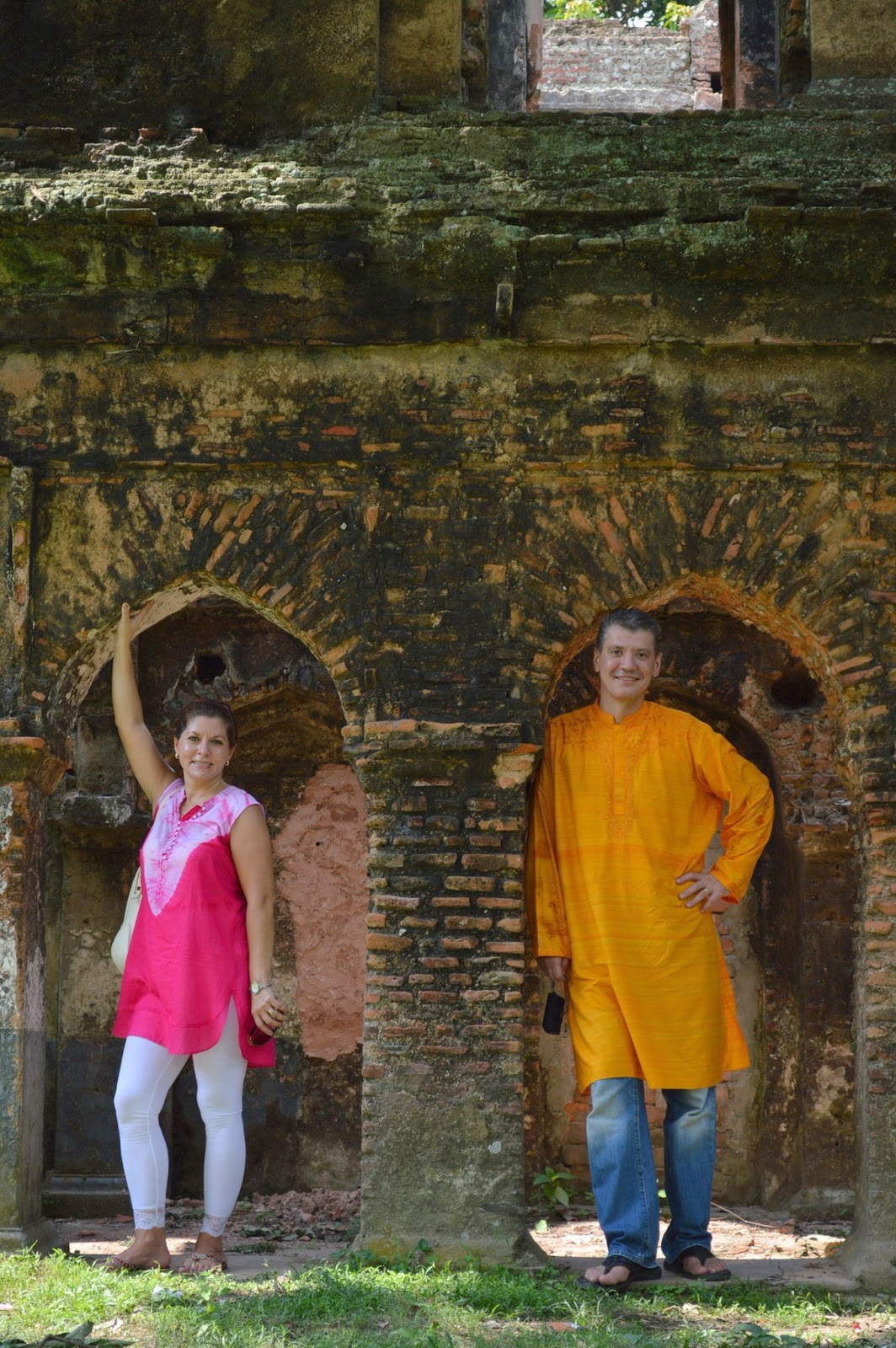
A "short" distance from Dhaka lies one of Bangladesh’s most impressive historical treasures: the ancient city of Sonargaon. Sonargaon (literal meaning ‘golden village’) was the capital of eastern Bengal under the Shahi Sultan rulers of Bengal during medieval age. It survives as a township, but it looks like a ghost city called Painam Nagar (Panam City).

Painam Nagar is a single line of narrow street made up of 50 once-lavish mansions owned by rich Hindu merchants. In those days, no city at the east Bengal was near as wealthy as Panam. All the buildings in the city were built facing a single road. The whole city is surrounded with artificial canals. These canals were dug to protect the city from any outside attack. After the 1965 war of India-Pakistan, Hindu businessmen started to leave for India to elude imminent death, leaving their mansions to the care of poor tenants.

Decades of political strife throughout Bangladesh hasn’t allowed the merchants to return. These lavish mansions have fallen into decay, their brick walls crumbling along with their rich historical past., and the city was deserted. World monument fund listed Panam city in the World 100 ruined city in 2006.


At the back of every mansion there is a lake or pond. Decrepit it may be, this once grandiose city still manages to convey its past. You can't escape his sensation of awe that embraces you all throughout the visit. And if you listen closely enough you might even hear the sound of forgotten times when Moghul nawabs beckoned temple dancers for lavish court entertainment.


Tuesday, March 26, 2013

Hapi Holi


Acording to Wikipedia, Holi is a religious spring festival celebrated by Hindus as a festival of colours. It is primarily observed in India and Nepal, but also by the minority Hindus in Bangladesh and Pakistan as well in countries with large Indic diaspora populations following Hinduism, such as Suriname, Malaysia, Guyana, South Africa, Trinidad and Tobago, the United Kingdom, the United States, Mauritius, and Fiji.


The festival has many purposes, but first and foremost, it celebrates the beginning of the new season, spring. Hindus believe it is a time of enjoying spring's abundant colors and saying farewell to winter. It also has a religious purpose, commemorating the victory of good over evil, brought about by the burning and destruction of the demoness named Holika. Although it is the least religious holiday, it is probably one of the most exhilarating ones in existence.

Holi got its name as the "Festival of Colors" from Lord Krishna, a reincarnation of Lord Vishnu, who liked to play pranks on the village girls by drenching them in water and colors. During this event, participants hold a bonfire, throw colored powder at each other, and celebrate wildly.

What fascinates me about India, without ever setting foot in the country yet is the strictness of social norms, which includes gaps between age, gender, status, and caste. Holi however removes them and the rich and poor, women and men, enjoy each other’s presence on this day.

We had an invitation to celebrate Holi at the Indian Embassy today and celebrate we did. Atmosphere was filled with excitement, fun and joy. We ended up saturated in water, with color all over our skin and clothes.


Saturday, March 9, 2013

Religion in Bangladesh, Part II


Around nine percent of the Bangladeshi population is still Hindu. Hinduism is a vast complex which can be identified through worship and a sense of ethics, or sanctions for actions. The following elements are included:

“reincarnation”: one lived before and will live again; how one is reborn is a result of past births, of what has been.

“karma”: right action. What determines rebirth is one's action: life is a web of what one has done in the past.

“dharma”: duty, obligation (religious). A person is good if he obeys his "dharma". One knows what duty life requires because one is in his life. A person is considered good if he obeys obligations life imposes on him.

“time”: no beginning, no end. The world is an endless process of time.

“order”: universe is an ordered entity in which everything has gone wrong: people have not done their duty. Order must be restored by changing what one does in life -a person can be changed within it, but one can't change the world.

The doctrine of "karma" and the attitude of relativism are expressions of the sense of a religious hierarchy that permeates the Hindu social system and differentiates it from that of Islam.


Thursday, March 7, 2013

Religion in Bangladesh, Part I

The Muslims invaded what is now Bangladesh in the 13th century, but even before that Islam had been introduced by early Arabs carrying maritime trade to the coast of Bengal.

It is hard to separate in Bangladesh the nationality, religion or culture, as almost 85 percent of the population is Muslim (predominantly Sunni). The faith of Islam is “in one God, on His book, His messengers and the day of Judgment.” The Five Pillars of Islam are the behavioral patterns, the outward steps to reach the faith. Every pillar has its own significance: “Shahada” (confession of faith): to believe in the oneness of God, His messengers, His books, His angels, in the day of judgment and in His life hereafter. “Salat” (prayer): to pray five times daily in a given interval of time is a Muslim's duty to God in expressing gratitude and awareness. Total submission to God is the denominator of all action of a Muslim. “Siyam” (fasting): to fast in the month of Ramadan is a must for Muslims. To abstain from food, drink, and all desires from dawn to dusk helps to develop patience, tolerance, will power and compassion for the hungry. “Zakat” (alms tax): to provide for the poor is the duty of the rich. The amount of 2.5 percent of one's possessions per year is what is believed needed to keep the economic system in harmony. “Hajj” (pilgrimage to Mecca): to perform a pilgrimage to Mecca once in a lifetime is a must for any Muslim who can afford it - physically and financially. Salvation is earned through the practice of the Five Pillars of Islam. There is also the concept of inescapable judgment according to one's deeds. Destiny is determined by the limited free will of man and the rest will be as Allah desires.

Islam is integrated into all facets of the Muslim's life in Bangladesh. You can see people praying during the day in places where you would expect the least, including even in front of the American Embassy entrance.